
Catalogue · Benz
Benz Parsifal (1903): the Benz sold exclusively in Spain by the Auto Garage Términus
What was the Benz Parsifal? The 1903 Benz & Cie. range
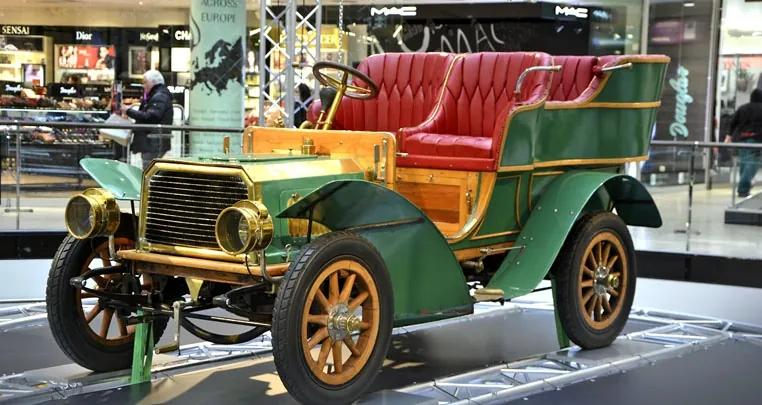
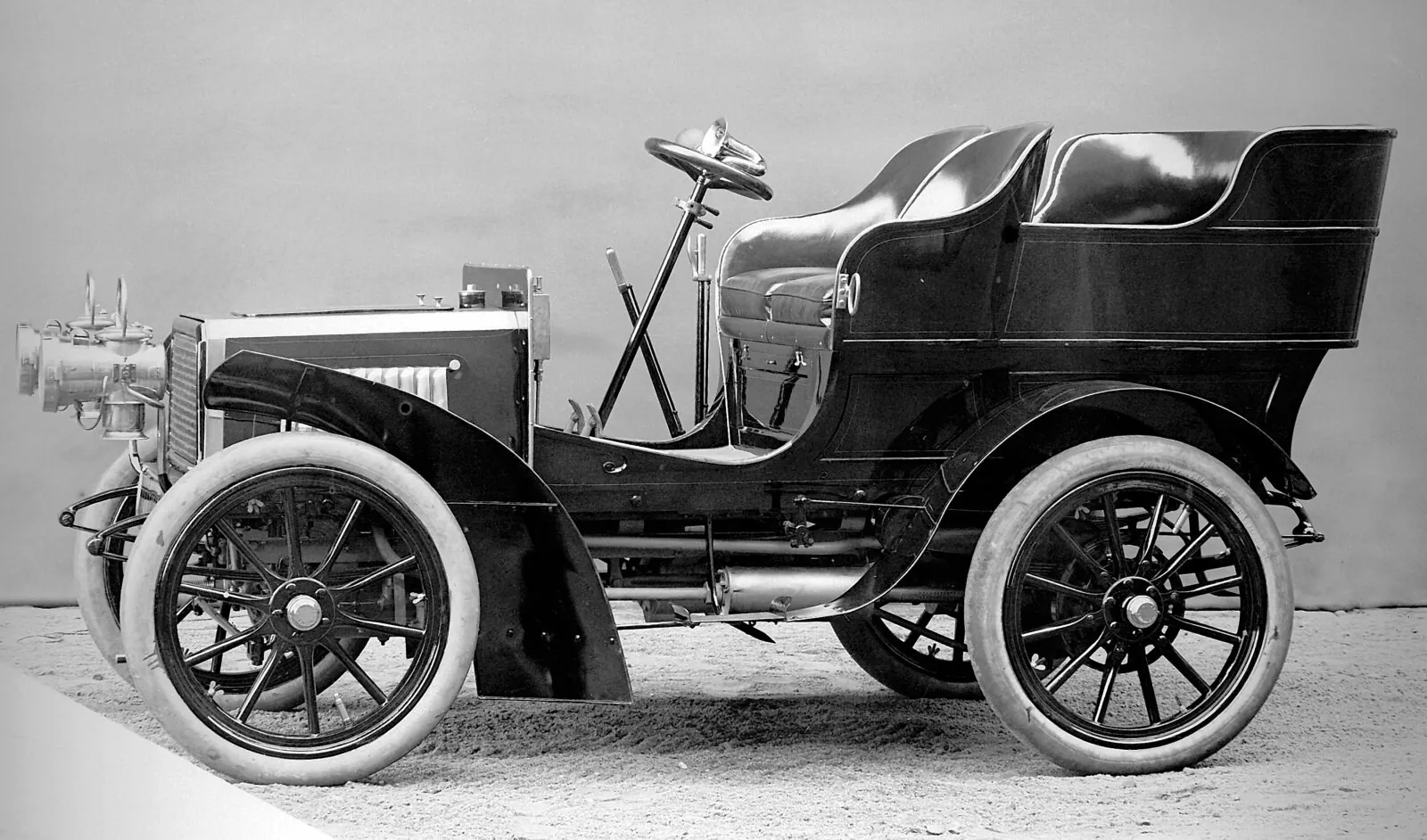
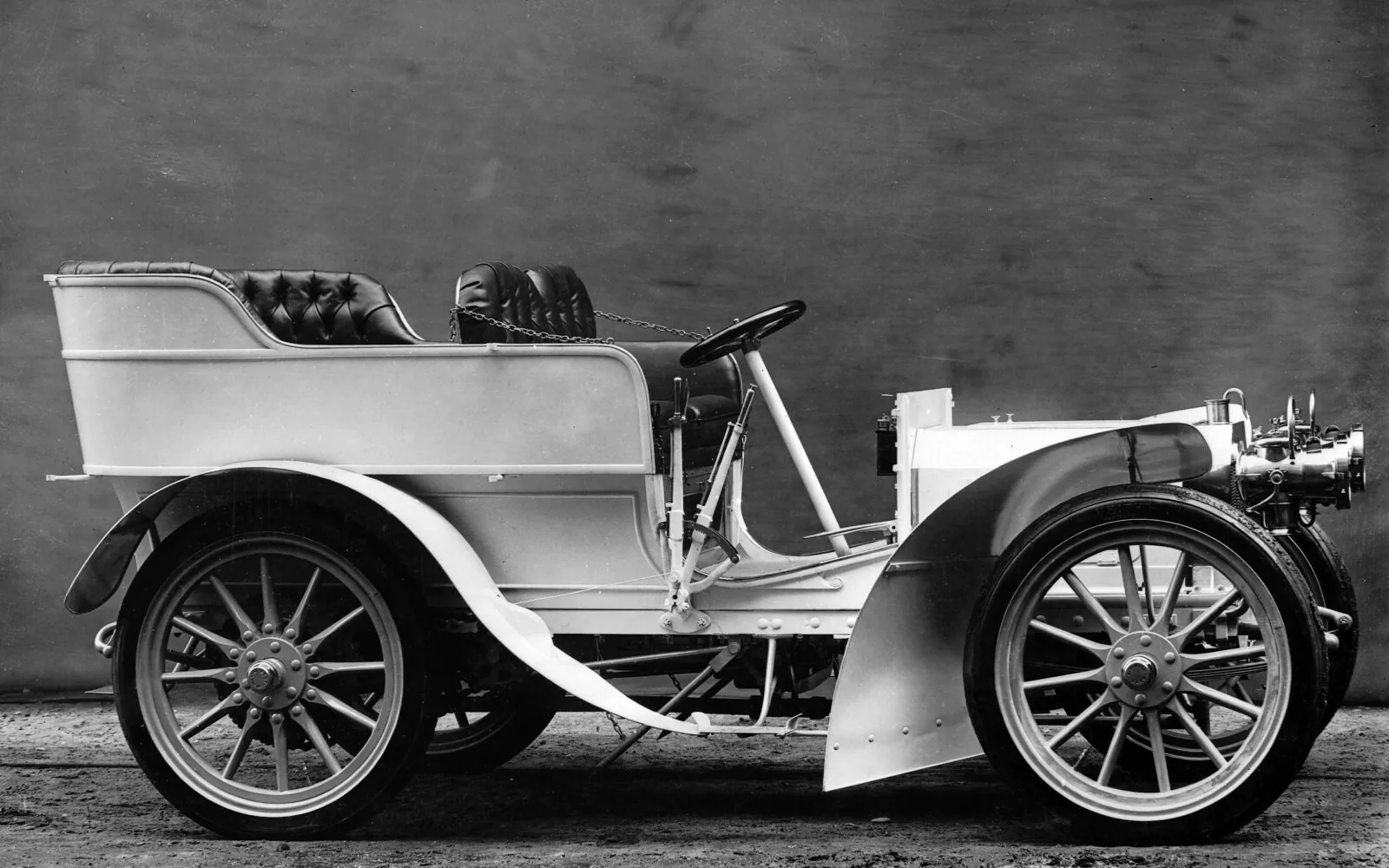
Shortly after the turn of the century, Benz & Cie. in Mannheim was struggling with sales, partly because of the commercial success of the Mercedes.
Julius Ganß, the Benz company's sales director, strongly recommended modernising the product range. To that end, the French designer Marius Barbarou, then chief designer at Clément-Barbarou, was hired together with his closest colleagues. Besides this "French design office", which had brought some almost finished designs with it, a "German design office" headed by Georg Diehl and Fritz Erle also worked on developing new models.
Neither of the two rival departments prevailed: the new model series, launched in early 1903 under the name "Parsifal", was created by combining the designs of both offices. It consisted of three 2-cylinder models with shaft drive (8, 10 and 12 hp) and a 4-cylinder, 16 hp model with chain drive. The model range was revised again in 1904.
As the range stood the test of time, Benz & Cie. enjoyed a financial recovery that allowed the company to catch up again in the fast-moving field of technology.
Source: official Mercedes-Benz website
Custom Benz Parsifal catalogue (1903)
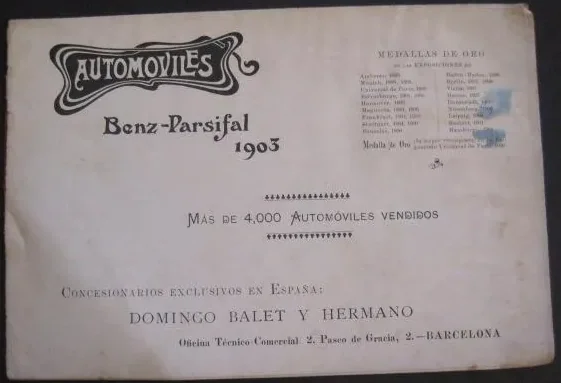
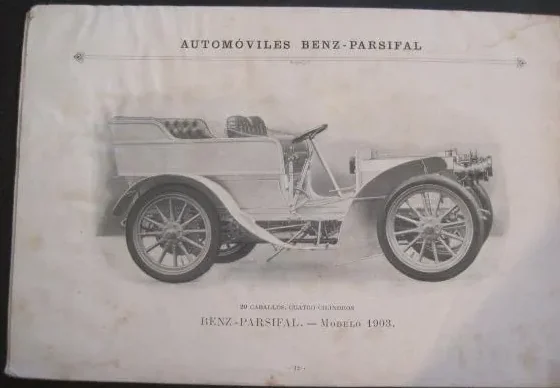
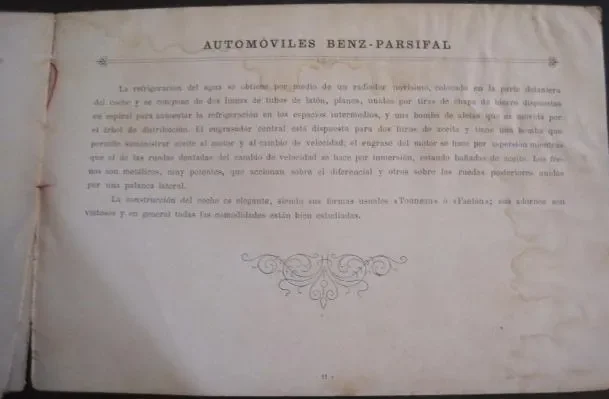
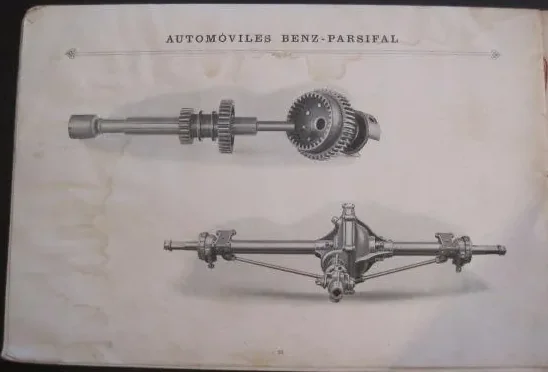
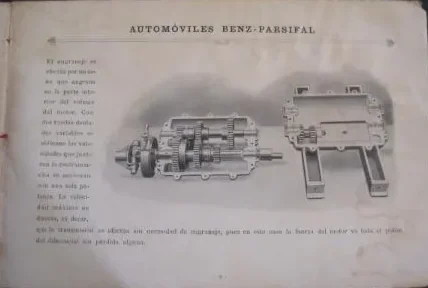
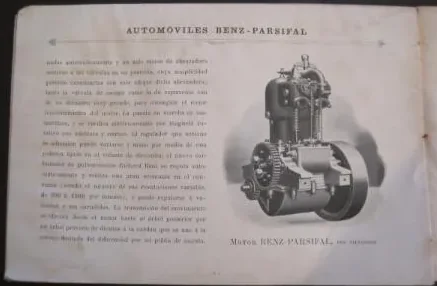
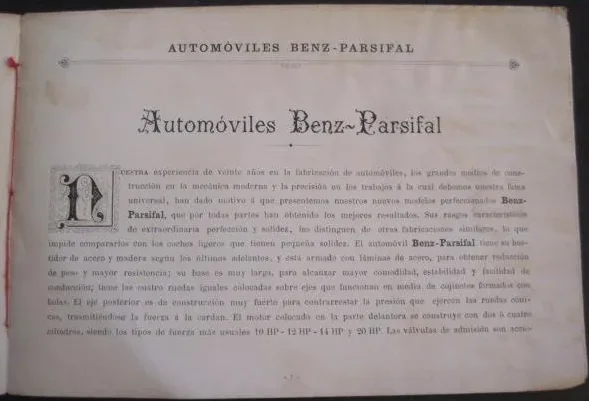
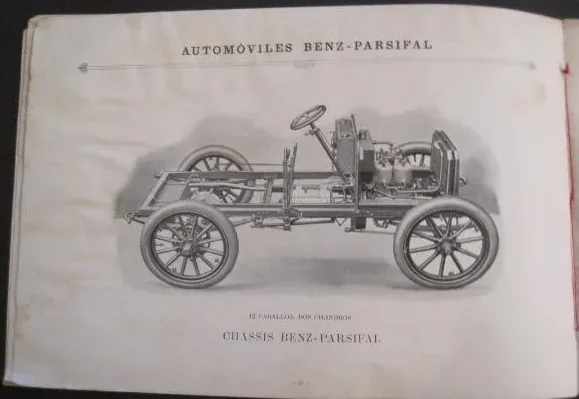
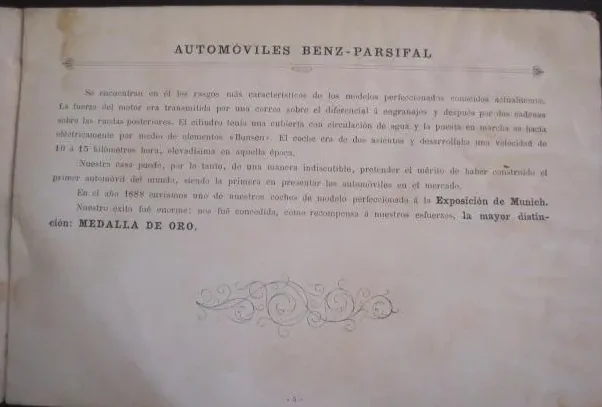
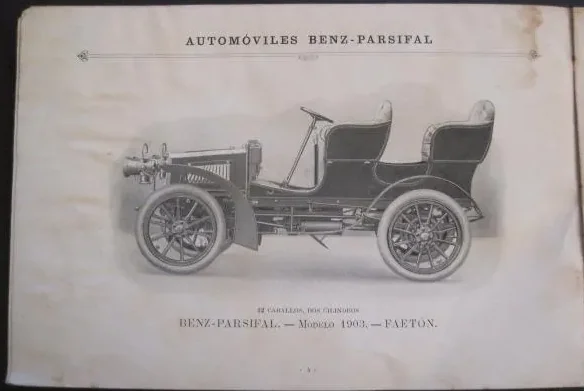
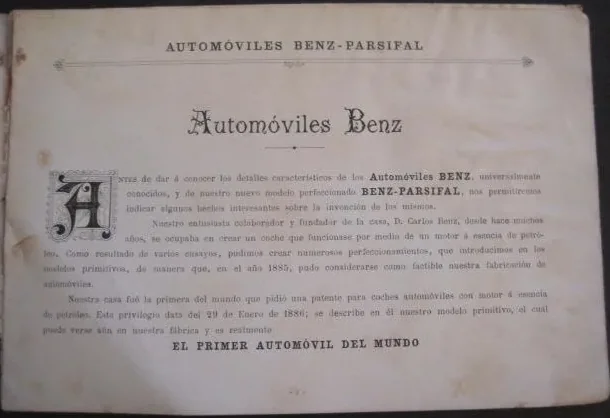
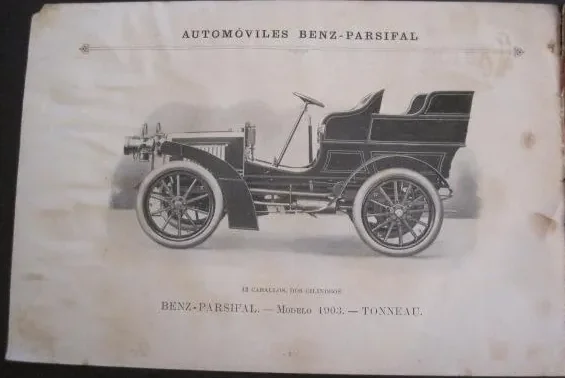
Customised for the Auto Garage Términus dealership, 1903
From Benz & Cie. to Mercedes-Benz: a brief history
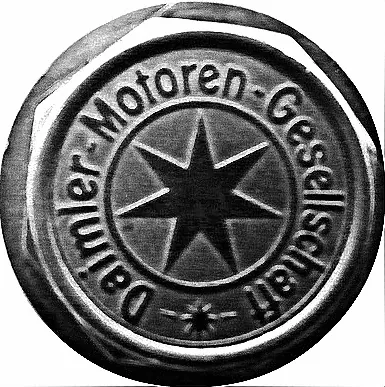
Karl Benz, with his Mannheim company Benz & Co (inventor of the first three-wheeled motor vehicle in 1883), and Gottlieb Daimler, with his Cannstatt company Daimler-Motoren-Gesellschaft (founded in 1890), were the two great figures whose names stood out above all the other manufacturers of the time.
Emil Jellinek, the Austrian distributor of the Daimler make, was obsessed with the name Mercedes. It was his daughter's name, he owned dozens of properties bearing it and generally tried to name anything he could Mercedes. He decided to combine his two "obsessions" and bought practically Daimler's entire output on two conditions:
- He was to be the exclusive distributor in Austria, Hungary, France, Belgium and the USA.
- The car was to be named Mercedes.
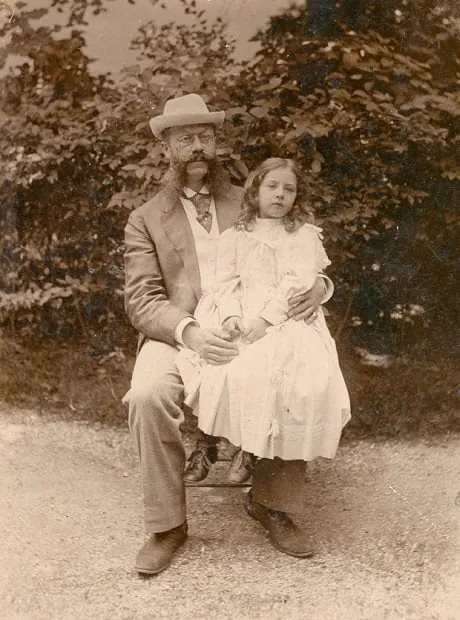
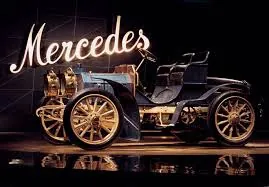
Daimler thought this a great idea, especially after Jellinek won the Nice–Magnanone race in his vehicle (Phoenix) and made the make and the model known all over the world. The catch was that everyone would call the cars Mercedes, not Daimler.
In the 1920s the two makes began working together, as the landscape after the economic crisis was devastating and hit both companies hard. In 1926 they decided to merge under the name Daimler-Benz AG, although their cars already bore the popular name we know today: Mercedes-Benz.

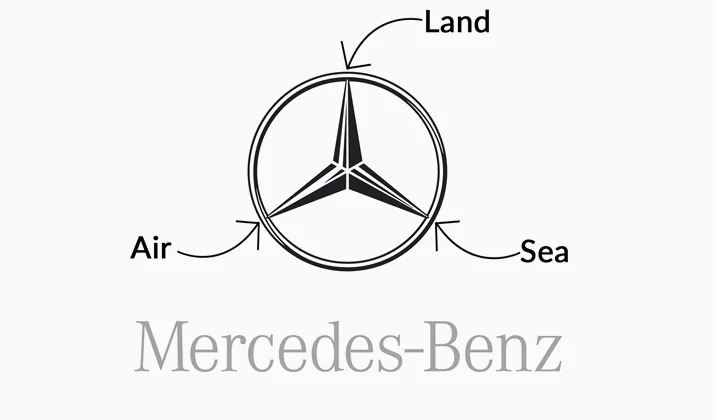
This was also when the famous logo of the three-pointed silver star in a circle was designed. There are two possible theories about its origin:
- A postcard Daimler sent to his daughter Mercedes on which he marked the points where the factory in Bad Cannstatt was located.
- A representation of land, sea and air, the elements in which Daimler engines had been pioneers, showing that the company could travel through any medium.